



If you can e-Foil, you’re pretty cool. We’ll give you that. It’s pretty darn impressive if you can balance on a hovering board that’s skimming along at 30mph. You’re riding above the water’s surface—courtesy of an electric motor and underwater wing—and that’s not an easy feat. But if you haven’t e-Foiled before (or maybe you have once on vacation and are curious about how it actually works), we’re breaking it down for you.
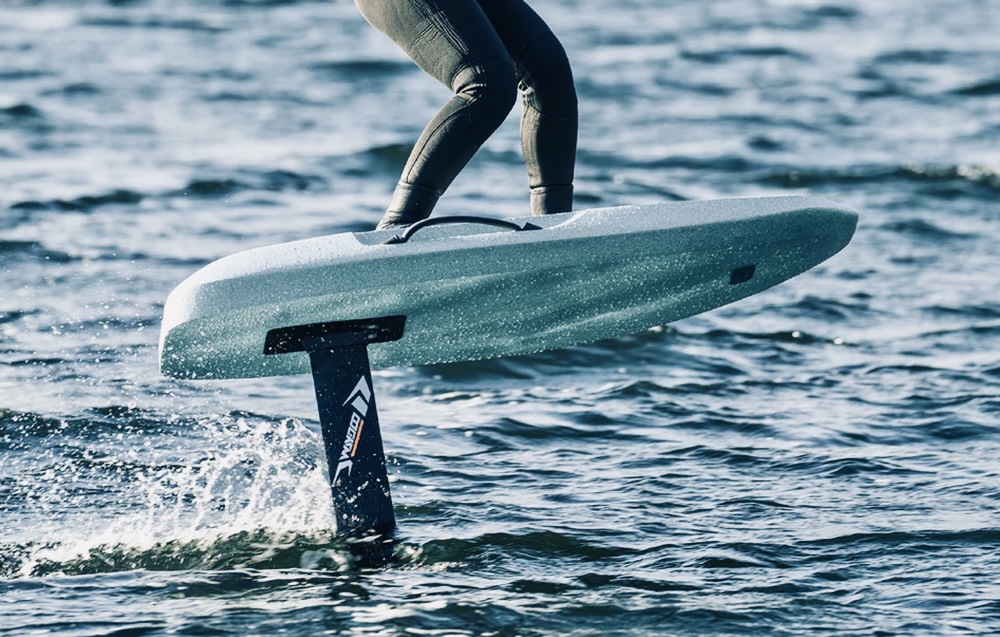
Essentially, an e-Foil is an electrically powered hydrofoil board. Most e-Foils are electric, and they combine a battery-powered motor, a handheld throttle remote, and a hydrofoil wing mounted beneath the board. As the rider accelerates, the underwater wing creates lift and raises the board—and rider—above the water. Unlike a powered surfboard that skims across the water, an e-Foil eventually leaves most of the water behind. Once the board lifts, only the mast and foil remain submerged. That reduces drag and softens the chop, creating the sensation of floating above the surface rather than carving through it.
And it’s one of the fastest growing water sports, too. E-Foiling removes the condition barrier from board sports. Surfing needs waves. Kiteboarding and wing foiling need wind. Wakeboarding needs a boat. An e-Foil works on relatively calm water, allowing riders to create their own speed and lift. That adaptability has made e-Foils appealing for lakefront homes, resorts, marinas, guided-water experiences, and dealer demo programs.
So How Does It Actually Work?
The system is surprisingly compact. A sealed lithium-ion battery sits inside the board and powers an electric motor mounted near the lower portion of the mast and fuselage. The rider uses a wireless handheld remote to control throttle, while body position and foot pressure control height, balance, and turning. The foil itself works much like an airplane wing, but underwater. As the board gains speed, water moving across the front wing produces lift. Once the foil generates enough lift, the board rises out of the water. The rider then controls the board’s height and direction through body position. Leaning slightly forward brings the board lower; shifting weight back increases lift. Gentle pressure through the feet helps guide turns, while the remote determines speed.
The best first session happens in deep, open, calm water with plenty of room away from docks, boats, swimmers, shorelines, and shallow hazards. A qualified instructor or dealer-led lesson is the smartest way to start. Most beginners start lying down or kneeling, gain enough speed to stabilize the board, stand up, and then learn the subtle weight shifts required to fly. The first few rides can be humbling, but once a rider finds that lift point, the learning curve is just part of the fun.
A Pretty Penny
E-Foiling remains a premium watersport, but pricing now spans a meaningful range. At the accessible end of the established market, Waydoo lists the Flyer EVO Pro Plus at **$6,499**, with a 6,000-watt motor, claimed 28 mph top speed, and claimed runtime of up to 120 minutes. The company notes that price excludes tax and shipping.
From there, a buyer can expect to spend roughly $7,000 to $10,000 for higher-spec configurations, depending on the board, battery, mast, foil wing, accessories, and dealer package. Premium systems begin around $10,999: Lift’s fiberglass LIFT5 F is priced at $10,999 and includes a 2.2 kWh battery with advertised ride time of up to 90 minutes.
For riders seeking a carbon board and higher-end direct-drive system, Lift lists its flagship LIFT5 at $14,999, also with advertised ride time of up to 90 minutes. The real purchase price is the fully configured package, not simply the product-page number. Buyers should confirm whether the quoted price includes the battery, charger, handheld remote, selected foil wings, board bag, safety leash, shipping, dealer setup, and training.
And What About the Charge?
Battery life varies widely by setup and how it is ridden. Lift advertises up to 90 minutes per charge for both its LIFT5 and LIFT5 F systems using a 2.2 kWh battery. Waydoo advertises up to 120 minutes for its Flyer EVO Pro Plus, although the actual result will depend on rider weight, speed, foil selection, conditions, battery age, and how aggressively the throttle is used. In practical terms, manufacturers’ “up to” figures are best treated as favorable-condition targets rather than guarantees for every session.
The Parental Question: Are They Safe?
They’re as safe as any other powerful watercraft; ultimately, this means that safety comes down to how the rider treats the machine. E-Foils are powerful watercraft and should be treated accordingly. The motor, foil wings, speed, and lithium-ion battery all demand proper training and responsible operation.
And like every other watercraft, there’s regulations. The Coast Guard classifies e-Foils as vessels for purposes of the regulations it administers. Owners and operators must comply with applicable state numbering requirements, carry a certificate of number when required, carry or wear a personal flotation device according to federal and state rules, comply with engine-cutoff-switch requirements, and carry specified safety gear, including a sound-producing device. The Coast Guard’s policy also explains that a fire extinguisher may be required unless all persons aboard are wearing a Coast Guard-approved personal flotation device. State and local requirements can differ, so riders should check the rules for the exact waterway before launching.
So Should You Get One?
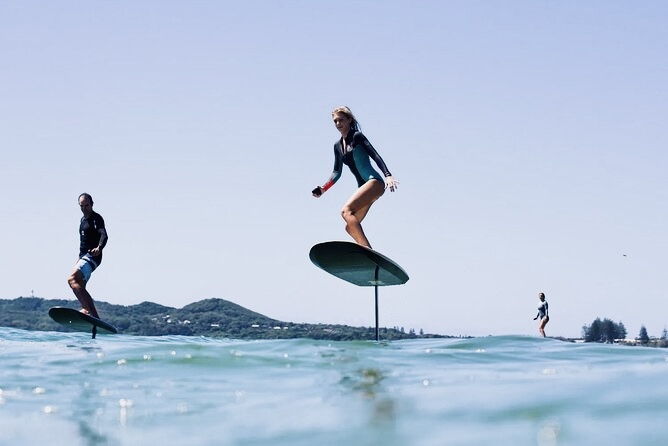
For the right rider, an e-Foil can be worth it because it creates a kind of freedom that conventional watersports cannot. It makes a calm lake feel like a surf break, a protected cove feel like a playground, and an early-morning waterfront session feel almost private.
For most first-time riders, though, the best path is not immediately buying a $10,000-plus machine. Book a lesson. Attend a dealer demo. Rent one at a resort or waterfront operator. Learn whether the sensation of flying is something you want to return to often enough to justify the investment.
E-Foils are not going to replace surfboards, wake boats, or personal watercraft, but they are offering a new way to experience on-the-water adrenaline. And that’s worth checking out.